
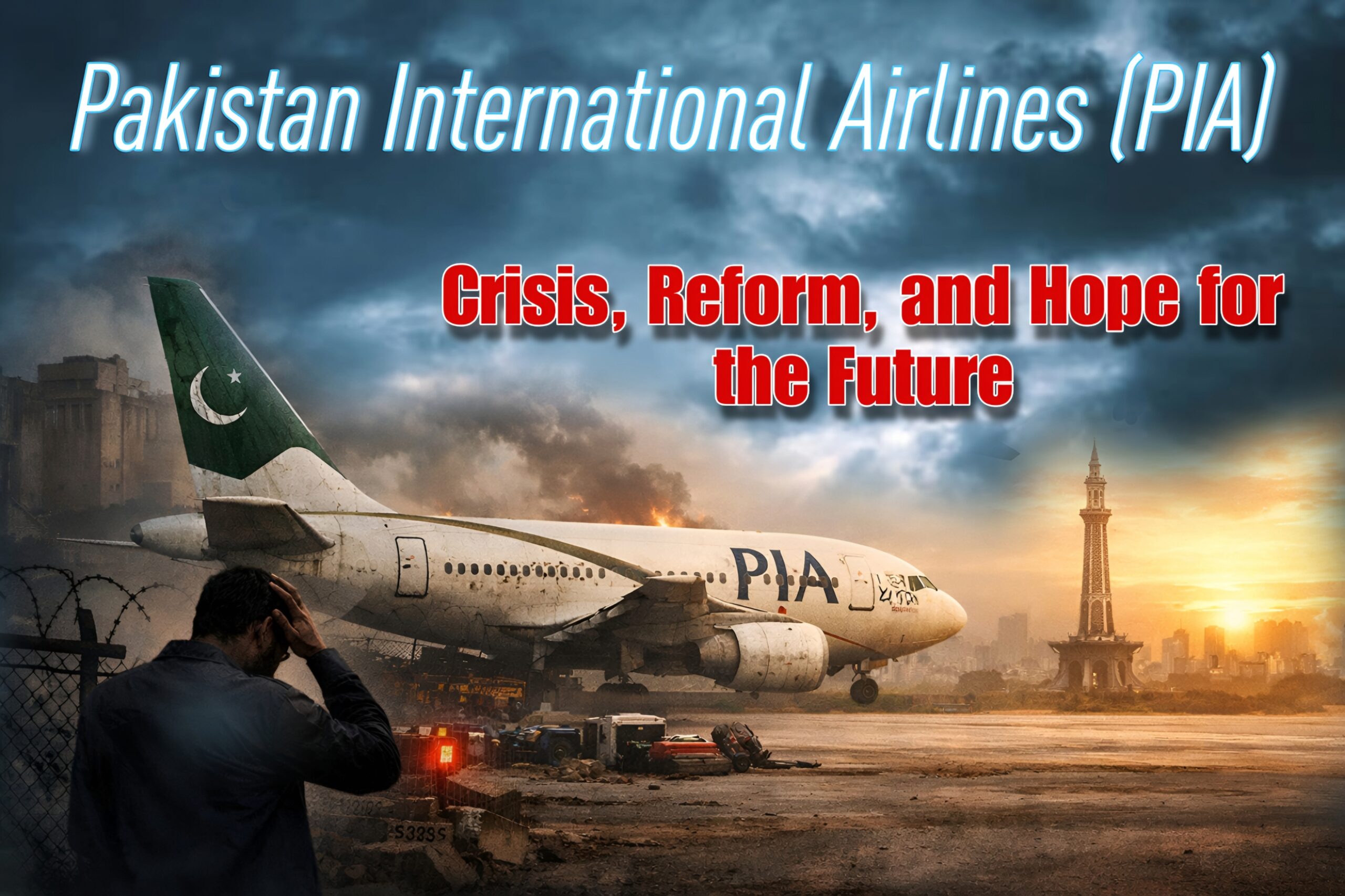
A Human View of Pakistan’s National Airline: The Changing Skies of PIA
Once the pride of the country, Pakistan International Airlines (PIA) is going through one of the biggest changes in its history. For many years, PIA represented national identity and connectivity by transporting Pakistanis to far-off cities and promising economic advancement. The airline is currently at a turning point, dealing with difficult operational issues, political disputes, and a broad privatization that many view as both a new beginning and a source of controversy.
A Legacy of Challenges
You must examine the many challenges that have shaped PIA in order to comprehend where it is today. PIA battled management challenges, operational inefficiencies, and financial losses for many years. The airline’s balance sheets were heavily impacted by its debt, bloated workforce, and aging fleet as recently as early 2025. Despite significant workforce reductions and financial reorganizations, attempts at reform and restructuring were made, but success always seemed unattainable.
Public trust was also damaged by operational problems. Travelers began to frequently complain about flight cancellations, long delays, and labor disputes. A disagreement between PIA’s management and its aircraft engineers intensified towards the end of 2025, resulting in both domestic and international flights being grounded and passengers becoming irate. Many families and business travelers had their travel plans disrupted when the engineers halted aircraft clearances due to safety concerns and disagreements with management.
Standards, Public Perception, and Safety
Discussions about flight safety and operational credibility became more prominent during these disruptions. While PIA’s management contended that criticism was overblown or politically motivated, some reports brought attention to issues with maintenance standards and regulatory compliance. Despite doubts about whether real progress was being made on the ground, the airline publicly defended its standards and maintained that it was operating within international aviation norms. Discussions about flight safety and operational credibility became more prominent during these disruptions. While PIA’s management contended that criticism was overblown or politically motivated, some reports brought attention to issues with maintenance standards and regulatory compliance. Despite doubts about whether real progress was being made on the ground, the airline publicly defended its standards and maintained that it was operating within international aviation norms.
Travelers’ A striking picture was also presented by firsthand accounts. The public’s scrutiny of PIA’s internal culture and operational professionalism grew as a result of some travelers’ experiences, which included lengthy delays, uncomfortable cabin conditions, and inconsistent service. Anecdotes differ, but they generally express the desire of many people for more dependable, safe air travel within Pakistan. (Note: Individual experiences are reflected in public opinions and personal narratives, which should be interpreted as such.)
Privatization: A Turning Point
Perhaps the most significant development in PIA’s recent history is its privatization — a move that has sparked heated debate across the country. In late 2025, after years of failed attempts and stalled negotiations, the government finally succeeded in selling a 75% stake in PIA to a private consortium led by major Pakistani investors. This deal, valued at approximately Rs135 billion, marks a watershed moment in the airline’s history.At the heart of this transition lies a simple but tough truth: the old model was no longer sustainable. Under government ownership, PIA struggled with political interference, inefficiencies, and financial burdens that discouraged serious private investment for years. The recent sale followed significant restructuring that included shifting massive portions of debt off PIA’s books — a controversial but necessary step to attract bidders.More importantly, the sale comes at a time when Pakistan is under economic pressure from international institutions like the International Monetary Fund, which have urged privatization of loss-making state enterprises to improve fiscal health and efficiency. The hope among supporters is that private management will inject capital, modern management practices, and renewed business strategy into the airline — freeing it from decades of stagnation.
Hope, Controversy, and Public Debate
However, privatization has not been universally welcomed. Critics argue that the deal undervalued PIA’s assets and that the government retained many long-term liabilities, leaving taxpayers responsible for ongoing pension obligations and historical debt. Some analysts believe that the vibrant fleet, valuable real estate holdings, and profitable international routes — many recently reopened after safety bans were lifted — could have generated greater returns under different deal structures.On the other hand, political leaders have celebrated the sale as a “landmark achievement” and a sign of maturity in Pakistan’s economic reforms. Government officials have emphasized that the privatization process was transparent and professionally handled, with the aim of revitalizing a beleaguered national institution. They argue that fresh capital and private expertise are exactly what PIA needs to compete with modern global airlines.
What Lies Ahead
As PIA prepares to transition into private hands by April 2026, Pakistanis everywhere are watching closely. The airline’s future will depend not just on financial restructuring, but on cultural transformation—improving safety standards, customer service, and operational efficiency. Success here could restore national pride and global confidence; failure could reinforce old doubts.In the end, PIA’s story remains deeply human: it is not just about planes, profits, and policies — but about the hopes of millions who look to the skies not just for travel, but as symbols of connection, ambition, and progress.